


Reflections from SusHi Tech Tokyo 2026: Scaling Healthcare AI Across Borders
NextStar Venture Partners Managing Director Deborah Magid recently returned from Tokyo with a great deal to reflect on. SusHi Tech Tokyo 2026, held April 27 through 29 at Tokyo Big Sight, Tokyo, did not disappoint.
Asia’s largest startup convention drew an estimated 60,000 attendees and featured 770 exhibitions, bringing together founders, investors, corporates, and policymakers from across the globe under a single organizing thesis: that sustainable cities are built through technology, collaboration, and shared ambition.
For Deborah, it was a first visit, and the scale of the event matched its reputation. “Huge, well-organized, fun, and informative” is how she described it. The invitation came from Angela Li, whose connection to the Tokyo innovation ecosystem made it possible for NextStar to participate in one of Asia’s most consequential gatherings of the year.
Scaling Healthcare Innovations Across Borders
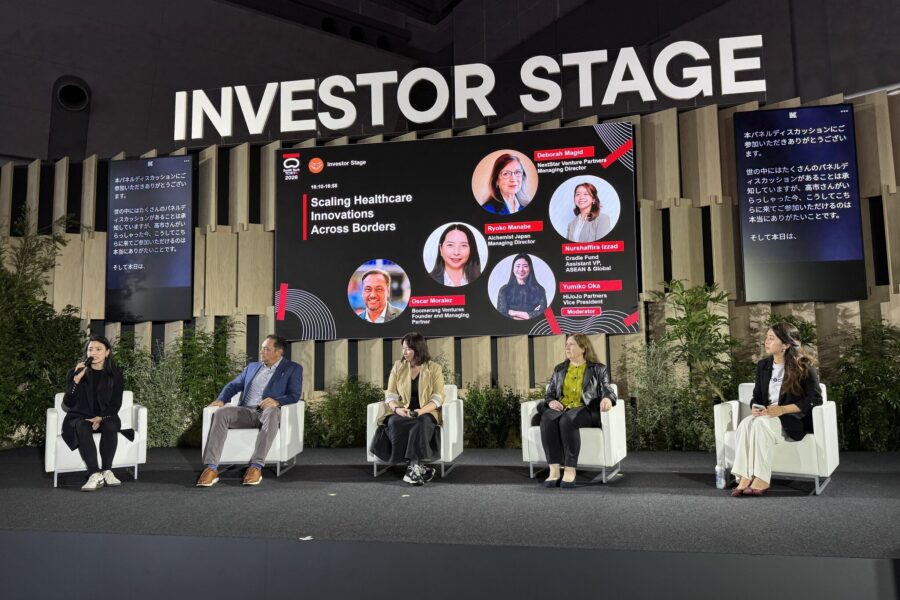
The highlight of Deborah’s time in Tokyo was the health tech panel she joined: “Scaling Healthcare Innovations Across Borders.” Moderated by Yumiko Oka, the panel brought together Oscar Moralez, Ryoko Manabe, and Nurshaffira Izzad for a focused and candid discussion on what it actually takes to move a healthcare solution from one market into another.
Three themes emerged from that conversation that are worth sharing with the broader NextStar community.
The first is that localization goes far deeper than translation. Language matters, but the expectations a Japanese user brings to an application’s interface are fundamentally different from those of a user in the United States or Europe. Startups entering new healthcare markets may need to rethink significant portions of their product, not just their messaging, to earn genuine adoption.
The second is that the healthcare system has historically been one of the most resistant to new technology adoption. Hospitals, payers, physicians, and clinics all move slowly, and for good reason. Startups that succeed tend to be the ones that understand the clinical context deeply, speak the language of the job, and often have medical professionals embedded in their teams. Those that do not rarely survive the first wave of enterprise sales. Once a first cohort of clients is in place, however, momentum tends to build.
The third insight is deceptively simple: people resist change. Individual consumers will not adopt a new healthcare tool unless it fits naturally into their existing habits, removes genuine friction, and delivers benefits they can feel. Reaching early influencers who can model that adoption is often the difference between a product that spreads and one that stalls.
On the Global Stage
Beyond the panel, Deborah also served as a judge on the Global Stage for agtech pitches alongside Hirotaka Tanaka, a reminder that the industries NextStar focuses on most, including agriculture and health, were well represented at the event and attracting serious attention from the international investment community.
The connections made in Tokyo, including a long-overdue reconnection with Eric Benhamou and Andrew Maywah, reflect the kind of high-quality network that SusHi Tech consistently assembles. These are not transactional encounters. They are the relationships that shape how capital flows and how companies scale.
Why Events Like This Matter to NextStar
At NextStar, we believe that AI in critical industries does not scale in a vacuum. It scales through the relationships, market understanding, and cross-border trust that events like SusHi Tech Tokyo make possible. Healthcare, in particular, is a sector where cultural fluency and local credibility are just as important as the technology itself. The lessons from the panel in Tokyo are ones we carry directly into how we evaluate and support the founders we back.
We are grateful to Angela Li and the entire SusHi Tech organizing team for a remarkable event, and we look forward to returning.